
Posted 2021-01-11. This document will be updated if the position is filled.
Hello! We're seeking help to establish a visual target and create new game assets for Davigo, a VR vs. PC battle game, developed in the Unity engine.If you are interested in applying, please either send a direct message to us on Twitter (with a link to your portfolio attached) or submit this form.
* We strongly encourage artists from marginalized and minority communities to apply. Our company is committed to creating and preserving a culture of diversity and inclusion. Read our Diversity and Inclusion Policy here.
What you would do
Help define the art style of the game and implement it in-engine. This could include:
Making sketches, paintovers or mock ups.
Creating 3d assets (modelling, texturing).
Composing the scene (lighting, skyboxes, overall colors).
Selecting shaders to define the look, or writing custom shaders.
What we think an artist would need
Have existing work in a game engine (doesn’t have to be Unity, but experience with it is nice)—best if it doesn’t target super high end specs, too.
Have a good eye for colour, silhouette and hierarchy.
Understanding of how game engine art pipelines work and what engines are capable of.
Enjoy working within graphical performance constraints similar to a mid tier mobile game (likely a single directional light, mostly simple shaders, etc.).
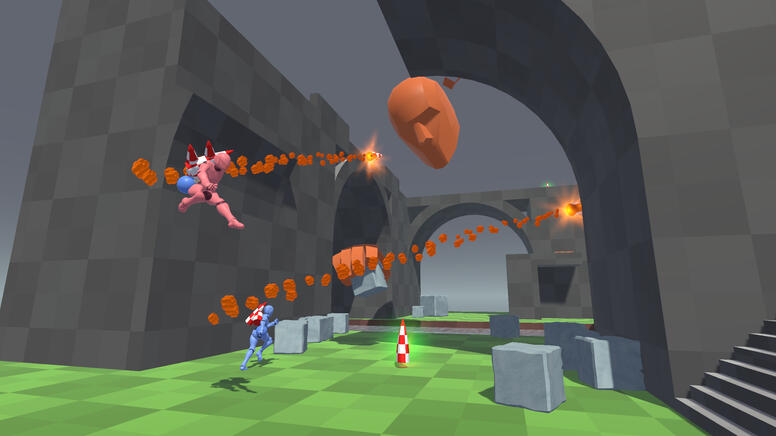
Davigo currently looks like this, which is a decidedly placeholder look.
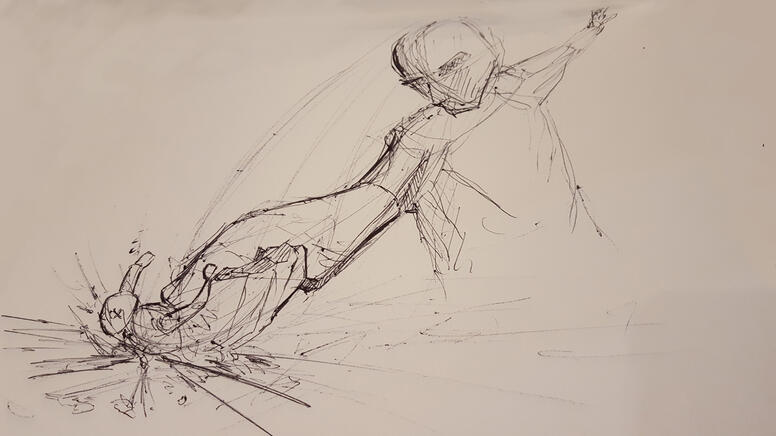
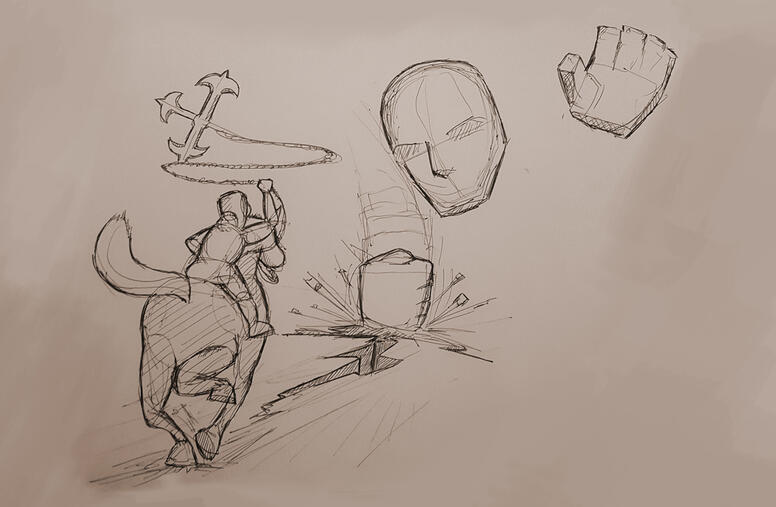
The final art should suitably set the scene for the kinetic, physical battles of Davigo. Below you can see some of our early concepts.
Art challenges for Davigo
As a VR game, Davigo is by default more performance intensive than standard PC/console games. As well, once we have implemented native online networking, this would open up the possibility to launch on the Oculus Quest. This means our technical performance requirements are more in line with a mobile title, rather than a mid tier PC game.
During gameplay, Davigo is viewed from two different perspectives—as the Warrior on PC (with a standard third person camera), and as the Giant in VR, at twenty times the scale. Gameplay must therefore be easily readable from both points of view.
We intend to support (and currently do!) all major VR headsets on the market. Some of these have relatively low resolution screens; essential gameplay objects must have clearly discernible silhouettes for the VR player to avoid them getting lost in pixelation.